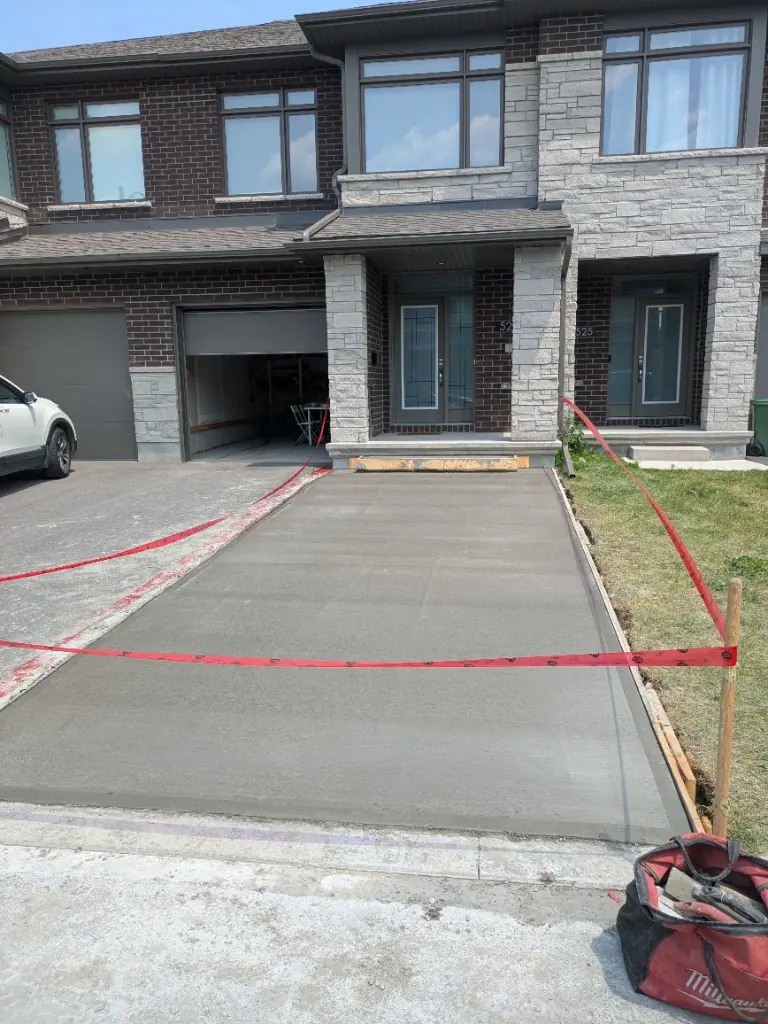
Why the first winter is different
Exterior concrete in Ottawa is made with entrained air: microscopic bubbles that give freezing water room to expand. Concrete Ontario explains the catch. At an early age, those air voids can still be saturated, so they can’t relieve pressure the way they will once the concrete has dried. Add salt to that saturated surface and you get scaling: the top layer of mortar flaking or peeling away.
The National Research Council’s guidance for concrete in severe frost and salt exposure makes the same point from the other direction: after curing, concrete needs time to air-dry before it meets salt. Young concrete hasn’t had that time. Everything in this guide follows from that one fact.
If you want the background, our article on why Ottawa concrete cracks and scales explains freeze-thaw and salt damage in detail.
Rule one: no de-icer of any type
Concrete Ontario’s recommendation is simple: no de-icer of any type on new concrete during its first winter. That includes:
- rock salt (sodium chloride)
- calcium chloride and magnesium chloride
- blended “ice melt” products, including ones sold as safe for concrete or pets
There are no exceptions for “just a little”. The goal is to keep salt out of the surface until the concrete has dried out.
Use sand for traction
Sand doesn’t melt ice. It gives grip, which is what you actually need on a step. Keep a bucket by the door and spread it thinly on the treads and landing after you’ve cleared them. Sweep it off in spring so it doesn’t grind into the surface.
| Do this first winter | Not this |
|---|---|
| Shovel early and often | Let snow get packed down and melt in |
| Spread sand for grip | Use any salt or ice melt |
| Use a plastic or rubber-edged shovel | Chip ice with a steel blade |
| Pile snow away from new concrete | Pile snow on the steps or landing |
| Shovel off plough spray and road slush | Leave salty slush to melt on the surface |
| Seal only after 30 days of air drying | Seal fresh concrete before it has dried |
The 30-day air-drying window
Concrete Ontario’s municipal guidance says concrete placed in cool weather should get at least 30 days of air drying after final curing before it sees its first de-icing salt. Concrete Alberta gives similar advice for its climate: avoid late-season placement where concrete could freeze or meet de-icers before it reaches its specified strength or has had 30 days of air drying.
In practice this means timing matters. Concrete poured in early summer has months to dry before the first snowfall. Concrete poured in late October may go into winter with very little drying time behind it. It isn’t defective, but it needs the strictest first-winter care. If your project is late in the season, ask about it when you book. Our guide to how concrete is poured covers curing and the cold-weather rules.
Salt you didn’t put down
Even if you never touch a bag of salt, some will reach your concrete:
- Plough spray. City ploughs push salty slush onto the end of driveways and the edge of walkways. Shovel it off rather than letting it melt where it lands.
- Cars. Concrete Saskatchewan notes that salt carried on cars can scale new driveways and garage slabs. Melting slush that drops off wheel wells sits on the slab. Shovel or sweep it out when you can.
- Boots. Salt from public sidewalks gets tracked onto your steps. A mat at the bottom of the steps helps.
- Neighbours and services. If someone else clears your walk, such as a snow-removal service, tell them in writing: no salt or ice melt this year.
Shovelling: choose the right tool
The surface of new concrete is the part that matters most for winter durability. Be gentle with it:
- Use a plastic shovel or one with a rubber or plastic edge.
- Don’t chop or chip ice with a steel blade or ice chopper. Spread sand on it instead and wait for a thaw.
- Clear snow before it gets packed down and starts to melt. Meltwater that soaks in and refreezes is what you’re trying to avoid.
Where to pile snow
Snow piles slowly melt and refreeze, keeping whatever is under them wet for weeks. Don’t pile snow on new steps, landings or the edges of a new walkway. Pile it on the lawn or garden side, where meltwater drains away from the concrete. Concrete Saskatchewan notes that standing salty water greatly increases scaling, so keep meltwater from snowbanks and downspouts running off, not across.
Sealing: when and when not
Concrete Ontario recommends routine sealing of residential flatwork, typically every 1–2 years, depending on exposure and product, and especially where de-icing salts are used. The timing for new concrete is the key part:
- Seal only after the concrete has had at least 30 days of air drying (Concrete Ontario’s driveway guidance, as summarised by an Ottawa installer).
- For a late-fall pour, Concrete Alberta’s advice is to apply the sealer in spring.
- A sealer is not a licence to use salt in the first winter. The no-de-icer rule still applies.
After year one: light rock salt only
From the second winter, Concrete Ontario says light-to-moderate rock salt (sodium chloride) may be used if needed. It’s much less severe on concrete than calcium or magnesium chloride and works to about −10 °C. Below that, sand is still your best tool.
Never use products containing ammonium sulphate, ammonium nitrate, or other sulphates or nitrates, which are common in fertilizers. Our guide to safe de-icers for concrete steps has the full comparison.
The short version
For the first winter: no de-icer of any type, sand for grip, a gentle shovel, snow piled away from the concrete, and plough spray and car slush cleared off quickly. Seal only after at least 30 days of air drying, which often means spring for a fall pour, and reseal every 1–2 years. From the second winter, use light rock salt only if you need it. We give every customer a first-winter care card with their new concrete steps, walkway or driveway. If you’re already seeing flaking, read about concrete repair.
Printable
First-winter care card


First-winter care card for new concrete
New concrete keeps gaining strength for weeks after the pour. These habits protect it through its first Ottawa winter.
- No de-icing salt of any kind on new concrete for its first winter — use clean sand or a non-chloride traction grit instead.
- Watch for salt you don't spread yourself: city ploughs, snow from the road, and slush dripping off cars all carry it.
- Shovel with a plastic blade, not a steel edge or ice chipper.
- Don't pile snow from the driveway or road onto new steps and walkways.
- Keep downspouts and roof drips aimed away from the steps so water doesn't pool and refreeze.
- If the concrete was poured in summer or early fall, ask about a penetrating sealer before the first freeze.
- After the first winter, re-seal on the schedule your installer recommends.
Questions about your new concrete? Call 343-997-9955.
Sources
Every technical claim in this article traces to a published source. We review articles when codes or standards change.