
Repair · Resurface · Quartz

Step and porch repair — when repair is the right answer

Not every crumbling step needs replacing. If the concrete underneath is sound, a repair or a new surface can buy years for a fraction of the cost. We'll tell you which one your steps actually need.

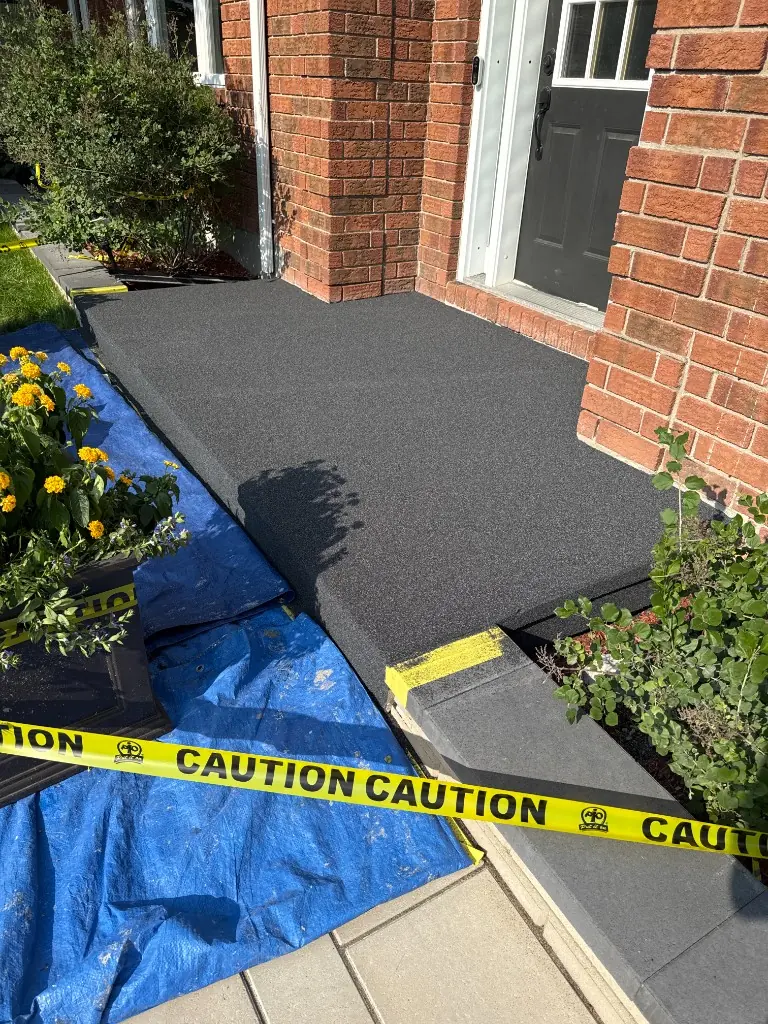
Front porch and step finished with a charcoal quartz coating, taped off while it cures
Charcoal quartz porch, curing
Typical repair
$300–$1,500
Quartz on steps
$15–$25 / sq ft
First question
Is the base moving?
Honest check
6-question quiz

Repair first, when it’s honest

We’d rather tell you a repair will do than sell you a new set of steps you don’t need yet. It’s also the easiest way to show we mean it when we do say replace.

The question is always the same: is the problem at the surface, or underneath?

  • Surface problems — scaling, popouts, crazing, a few broken edges, open but stable cracks — can usually be repaired or resurfaced.
  • Underneath problems — a base that’s sinking or tilting the steps, widespread hollow sound (delamination), rusted rebar breaking the concrete open, structural cracks that keep growing — can’t be fixed from the top. Coatings and patches only last as long as what they’re bonded to.

What we repair

Concrete step repair — rebuilding spalled nosings and corners, routing and filling cracks, patching popouts, treating early rust staining, and lifting and resetting precast sets that have settled but are otherwise sound.

Quartz coating — a ground, primed, multi-layer quartz system with a UV-stable topcoat that gives sound steps and porches a new surface, colour and grip.

Porch resurfacing — new wearing surfaces for porches whose slab is still sound and stable.

Not sure what you’re looking at?

Use the damage dictionary below to put a name to what’s happening, then take the six-question repair-or-replace quiz. It’s built to recommend the cheapest fix that will actually last, and it tells you why.

Damage dictionary

Name what you see on your steps

Eight common kinds of concrete damage, what causes them, and what they usually take to fix.

Scaling

Usually: resurface

What it looks like
The top skin flakes or peels off in thin patches, leaving a rough surface. Often worst where salt and meltwater sit.
Why it happens
Water in the surface freezes and expands; de-icing salts make the cycles harsher. Non-air-entrained or overworked surfaces scale first.
What it usually takes
Shallow scaling on sound concrete can be ground and resurfaced or quartz-coated.

Spalling

Usually: repair

What it looks like
Deeper chunks break away, usually at the front edge of a step (the nosing), corners, or over rusting steel.
Why it happens
Freeze-thaw damage deeper in the concrete, impact from shovels and ice chippers, or rebar rusting and expanding.
What it usually takes
Isolated spalls are rebuilt with repair mortar. Widespread spalling means replacement.

Popouts

Usually: resurface

What it looks like
Small cone-shaped pits, often with a broken piece of stone at the bottom.
Why it happens
A porous stone (aggregate) near the surface absorbs water, freezes and pops the concrete above it off.
What it usually takes
Usually cosmetic. Patch or coat if the look bothers you.

Crazing

Usually: resurface

What it looks like
A fine spider-web of hairline cracks across the surface, most visible when the concrete is drying after rain.
Why it happens
The surface dried or cooled faster than the concrete beneath it when it was first placed.
What it usually takes
Cosmetic. A penetrating sealer helps; a quartz finish hides it completely.

Delamination

Often: replace

What it looks like
Sounds hollow when tapped. The surface may lift off in sheets.
Why it happens
The top layer separated from the concrete below — common after finishing errors or repeated freezing of trapped water.
What it usually takes
Nothing bonds well to a delaminated layer. Small areas can be cut out; large areas mean new steps.

Settlement & tilt

Often: replace

What it looks like
Steps sink, lean away from the house or rock. A gap opens at the foundation wall and water runs toward the house.
Why it happens
A thin, soft or poorly compacted base, or frost moving the soil underneath.
What it usually takes
Precast steps can sometimes be lifted, re-based and reset. Poured steps that have moved usually need replacing.

Rust stains & exposed rebar

Usually: repair

What it looks like
Orange-brown streaks, or bare steel showing at edges and cracks.
Why it happens
Water and chlorides from salt reach the reinforcement. Rusting steel expands and cracks the concrete around it.
What it usually takes
Early staining can be repaired and sealed. Exposed, rusting steel over a large area means replacement.

Efflorescence

Usually: resurface

What it looks like
A white, powdery or crusty film, often near joints and the bottom of risers.
Why it happens
Water moving through the concrete carries soluble salts to the surface, where they dry out.
What it usually takes
Cosmetic. Clean it off, then look for where the water is coming from.

Not sure which one you have? Take the 6-question repair-or-replace check

FAQ

Repair & quartz: common questions

Can crumbling concrete steps be repaired?

Often, if the damage is at the surface and the steps aren't moving. Scaling, broken front edges and open cracks on sound concrete can be repaired or resurfaced. Steps that are sinking, tilting, hollow-sounding over large areas or showing rusted rebar are usually past repair.

How much does step repair cost?

Most step repairs run about $300–$1,500, from patching a few cracks to rebuilding several broken nosings. Resurfacing a sound porch runs about $2,500–$4,500. Quartz systems are priced by area — roughly $15–$25 per sq ft on steps and porches, with minimums for small jobs.

How long does a repair last?

It depends on why the concrete failed. A repair over sound concrete, with the water source dealt with, can last for years. A repair over a moving base or delaminated concrete won't — which is why we check the base and tap-test before recommending one.

Do repairs need a permit?

Repairing or resurfacing existing steps typically doesn't involve the structural work that triggers a permit. Structural repairs to porches do. We tell you if your job crosses that line.

Free quote · Ottawa & area

Let’s talk about your front steps.

Tell us what your entrance looks like today. We visit, measure and give you a clear written quote — no pressure, no surprises.

Get your free step quote

We reply within one business day. No spam, no sharing your details.

Capital Steps · Step guide

Ask or search

Answers come only from our verified knowledge bank — sourced from CSA A23.1, the Ontario Building Code, the City of Ottawa and Ottawa market research. If we don't have a verified answer, we'll say so.

Popular questions