
Steps · Compare

Precast vs poured concrete steps — the honest comparison

Both can last for decades in Ottawa. Both can fail early if the base is wrong. The real differences are speed, cost, size and site access — here they are side by side.

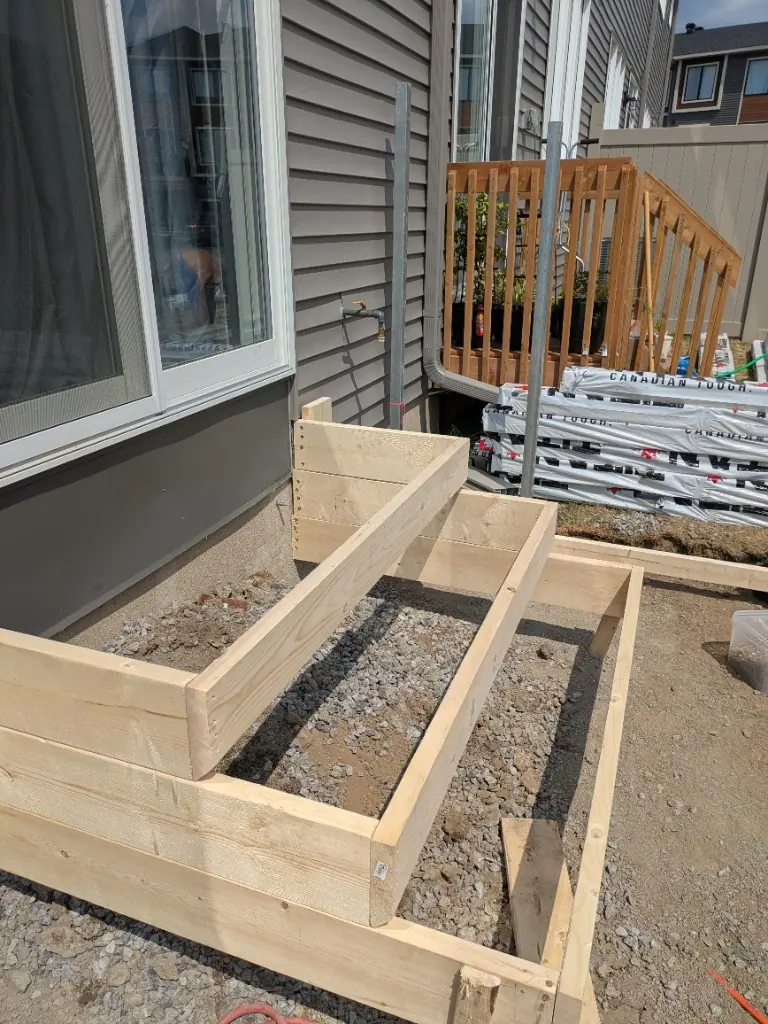
Wooden forms for new steps set on a compacted gravel base
Step forms on a compacted gravel base
Precast entrance
$1,800–$4,500
Poured entrance
$2,500–$6,000
Precast on site
Usually one visit
Poured on site
2–4 days + curing
01 Material
02 Width of the steps

Most Ottawa front entrances are 4–5 ft wide. Measure the old steps edge to edge.

03 Number of risers
3

Count the vertical faces from the walkway up to the door sill — each one is a riser.

04 Landing at the top?
05 Remove old steps?
06 Railing

Ontario's building code requires a handrail on exterior steps with more than three risers — see railing rules.

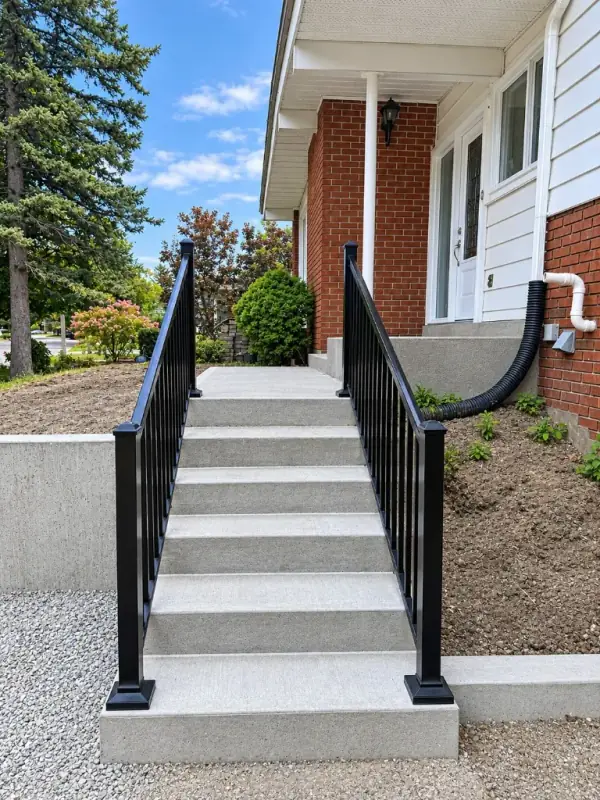
New concrete front steps with black aluminum railings beside a concrete retaining wall
Our work — concrete steps, aluminum railings and retaining wall.

Ottawa ballpark for this design

$3,550 – $6,900

2–4 working days, then curing

See the breakdown
  • Mobilization, base prep & setting$700–$1,300
  • 3 risers at 4 ft wide$900–$1,350
  • Landing / platform at 4 ft wide$900–$1,900
  • Remove & dispose of old steps$350–$900
  • Aluminum (powder-coated) railing, one side (~8 ft each)$720–$1,440

Formed and poured in place to any size or shape, with 32 MPa air-entrained concrete. Most custom.

Ottawa market ballpark before HST — not a quote. Your final price is confirmed in writing after a free on-site assessment of access, soil, height, demolition and finish.

Get a real quote for this design

Want to see this design on your house? Get a free design preview.

Step 2 · Make it real

Send us this design. We'll come measure.

Your choices travel with the request, so we arrive already knowing what you want. Final pricing is confirmed after a free on-site assessment.

    The short answer

    Choose precast if your entrance is a standard size, a boom truck can reach it, and you want the job done fast at the lowest concrete price.

    Choose poured if you want to change the size or shape, need more risers or a deeper landing than a mould allows, want steps and porch as one, or the site can’t take a boom truck.

    The comparison table below goes factor by factor. Use the estimator above to price both options for your exact entrance.

    What actually decides how long concrete steps last

    Homeowners often ask which method “lasts longer.” We couldn’t find any Ottawa data that settles it, and we won’t invent a number. What we do know is what kills concrete steps here:

    1. A weak or soft base. Steps on topsoil, soft fill or a thin, poorly compacted layer settle and tilt. Water gets underneath, freezes, and moves them more each winter.
    2. Missing support. The Ontario Building Code requires exterior concrete stairs with more than two risers to be supported on walls or piers, or cantilevered from the foundation wall with proper anchorage (OBC 9.8.9.2 and 9.8.10). Precast and poured both need this.
    3. The wrong concrete. Exterior steps need air-entrained concrete with a low water-cement ratio — CSA class C-2, 32 MPa. Without entrained air, freeze-thaw scaling starts early.
    4. Surface abuse. Calcium and magnesium chloride de-icers, ice chippers, and salty snow piled on the steps all speed up scaling.
    5. Water. Downspouts aimed at the steps and landings that slope toward the door keep the concrete saturated.

    Get those right and either method gives you a long-lived entrance.

    Precast, in practice

    Precast units are cast and cured at a plant. Ottawa makers use air-entrained, reinforced concrete. Common widths are 4, 5 and 6 ft, and local moulds go up to eight risers. Because curing happened at the plant, the set is usable the same day it’s placed. Central Precast says its steps can be installed year-round. In practice, frozen ground makes winter base work harder, so most replacements happen spring to late fall.

    One underrated advantage: if a precast set settles years later, it can often be lifted, re-based and reset rather than replaced.

    Poured, in practice

    Poured steps are formed and poured on site in the C-2 mix. They take more days — removal, base, forming, pour, finishing — and then need curing before railings go on. In exchange, they fit anything: wide, tall, curved, wrapped around a corner, or poured together with a porch.

    Weather matters more for poured work. Below 5 °C the building code requires the concrete to be kept warm during placement and for 72 hours after, and new concrete needs time to air-dry before its first salt season.

    Cost, side by side

    PrecastPoured
    Typical Ottawa entrance$1,800–$4,500 (incl. removal)$2,500–$6,000
    What pushes it upWider units, landings, tough accessHeight, width, landing size, shape
    RailingsAdded after settingAdded after curing

    Both ranges are ballparks before HST. Your written quote follows a free site visit.

    Still undecided?

    The material matchmaker below lets you weigh speed, budget, looks and custom shape and see how precast and poured rank against wood, composite and interlock. Or book a site visit — we’ll tell you which one your entrance suits, and why.

    Side by side

    Precast vs poured, factor by factor

    FactorPrecast concretePoured concrete
    How it's madeCast in moulds at a plant and cured there under controlled conditions.Formed, reinforced and poured in place at your house.
    Time on siteUsually one visit once the old steps are out and the base is ready.Typically 2–4 days of work (demolition, base, forming, pour, finishing), then curing.
    Walk on itSame day — the curing already happened at the plant.Light foot traffic after a day or two; full design strength builds over about 28 days.
    Sizes & shapesStandard widths, riser heights and landing sizes from the manufacturer's moulds.Any width, height, shape or landing size — curves, wraparounds and odd sites included.
    Ottawa ballpark$1,800–$4,500 for a typical front entrance$2,500–$6,000 for a typical front entrance
    Concrete specPlant-made mix; manufacturers publish their own strength specs.We order CSA exposure class C-2: 32 MPa, air-entrained, max 0.45 water-cement ratio.
    Weather windowCan be set later into the fall, since the unit was cured indoors.Best poured in the warm season; cold weather needs heating and protection.
    Site accessA boom truck needs to reach the entrance from the driveway or street.A ready-mix truck, pump or wheelbarrow route — works on tighter sites.
    Fixing it laterA settled precast set can often be lifted, re-based and reset.Repairs are local patches; a failed poured stair is broken out and redone.
    Best forLike-for-like replacement of standard builder steps, fast and at a lower cost.Custom entrances, wide or unusual layouts, and porches poured together with the steps.

    Marks the stronger option for that factor. Ottawa market ballpark before HST — not a quote. Your final price is confirmed in writing after a free on-site assessment of access, soil, height, demolition and finish.

    Not sure which material?

    Rank step materials by what matters to you

    Material matchmaker

    What matters most to you?

    Slide each priority. The ranking updates live.

      Relative ratings (1 = weakest, 5 = strongest) are Capital Steps' comparative judgement from the research in knowledge/materials.md and pricing in pricing.config.mjs — not lab measurements.

      FAQ

      Precast vs poured: common questions

      Which lasts longer, precast or poured?

      There's no published Ottawa data showing one outlasts the other. Both use air-entrained concrete; both last when they're set on a proper base with good drainage and kept away from harsh de-icers. The base and the habits around the steps decide lifespan more than the method.

      Which is cheaper?

      For a standard entrance, precast usually is — typical Ottawa ballparks are $1,800–$4,500 for precast including removal, and $2,500–$6,000 for poured. Once the entrance gets wide, tall or custom, poured closes the gap or wins because precast hits the limits of the mould.

      Can precast steps be custom-sized?

      Within limits. Local makers offer several widths and riser counts, with or without landings, and some cast custom widths. Curves, wraparounds and very deep landings are poured-concrete territory.

      Is precast just for budget jobs?

      No. With an exposed-aggregate face, a good railing and a quartz finish, a precast set can look as finished as any poured stair. It's the right choice for many standard entrances regardless of budget.

      My old steps were precast. Do new ones have to be?

      No. You can switch to poured to change the size or layout, or to pour steps and porch together. You can also stay with precast for speed and simplicity.

      Free quote · Ottawa & area

      Let’s talk about your front steps.

      Tell us what your entrance looks like today. We visit, measure and give you a clear written quote — no pressure, no surprises.

      Get your free step quote

      We reply within one business day. No spam, no sharing your details.

      Capital Steps · Step guide

      Ask or search

      Answers come only from our verified knowledge bank — sourced from CSA A23.1, the Ontario Building Code, the City of Ottawa and Ottawa market research. If we don't have a verified answer, we'll say so.

      Popular questions